Design
Designing the Island That Hides Its Power
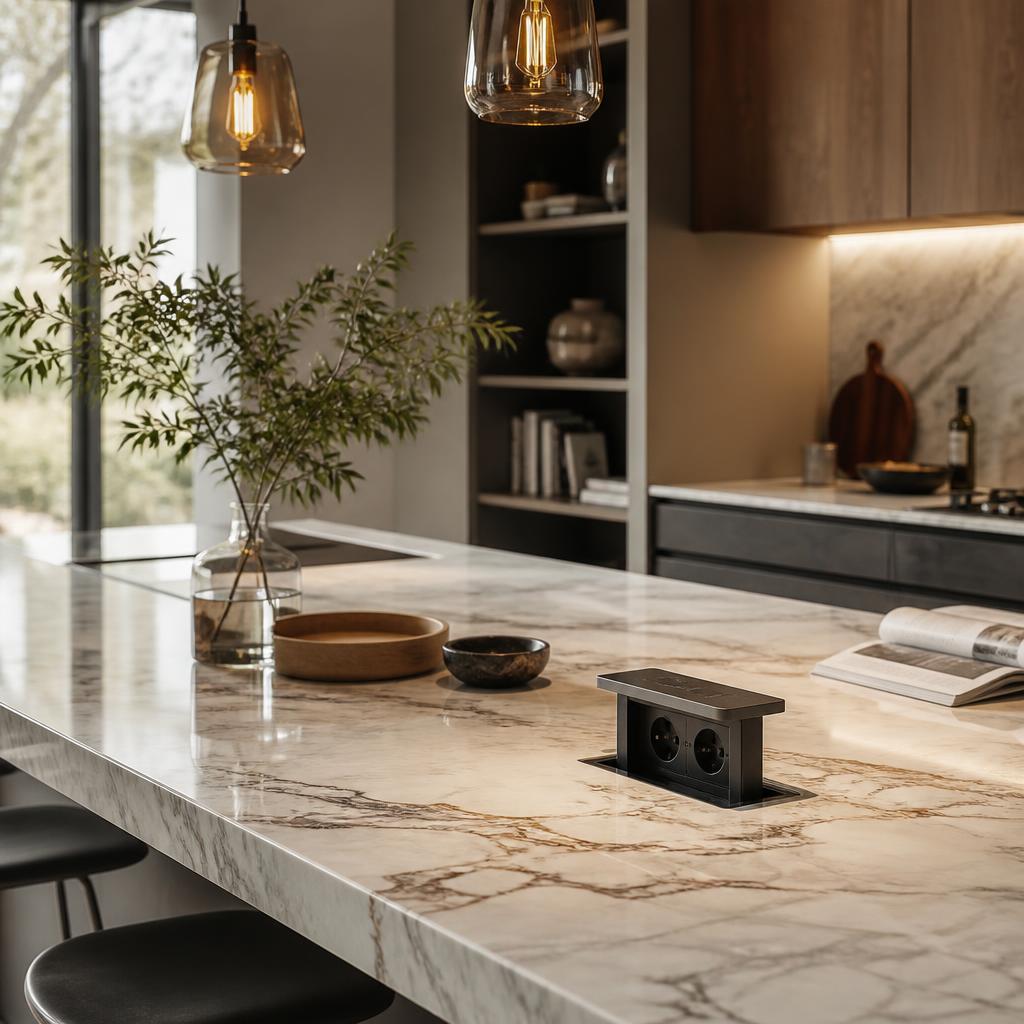
The kitchen island is the most photographed surface in a modern home and the one asked to carry the most power. Resolving that contradiction is a detailing problem, not a product problem.
Placement before product
Set the module on the working side of the island, offset from the centre line so the cut never lands in the field of view from the living area. Allow 90 mm of clear carcass depth below the stone.
Where two cooks share the island, two smaller round modules almost always beat one long linear unit.
Cutting and sealing stone
Core-drill rather than jigsaw, and seal the cut edge before the module is dropped in. Engineered stone and porcelain both wick moisture through an unsealed edge.
Our table pop-up modules carry a compression gasket under the collar, so the joint is closed against spills without a visible bead of silicone.
Living with it
A push-to-open lid should sit flush enough that a hand runs over it without catching. We test lids to 20,000 cycles and specify a damped return so the module never slams.
Wireless charging pads are worth the extra depth in homes where phones live on the island; skip them where the island is used for prep.
Newsletter
Design notes, four times a year.
New product releases, finish studies and project stories — sent quarterly, never more often.
We only use your address for this newsletter. Unsubscribe in one click — see our Privacy Policy.
Join the discussion
Comments open soon. In the meantime, our specification desk answers questions about anything published here.
Related reading